
What Is the Best Packaging for Private Label Chewing Gum?
2026-10-20

Private label chewing gum can fail before anyone tastes it. The problem is not always flavor. It is often packaging.
A weak pack makes gum look cheap. It can lose freshness. It may crack during delivery. It may also disappear on a crowded shelf.
The solution is to choose packaging based on protection, portability, shelf display, e-commerce delivery, and cost. I am Suifa, a chewing gum manufacturer. So I look at packaging as a sales tool, not just a container.
The best packaging for private label chewing gum depends on your sales channel and brand position. For retail shelves, I usually recommend flip-top boxes, bottles, blister packs, or tins. For online sales, I prefer pouches, bottles, tins, and well-protected flip-top boxes. For low-cost sampling, stick packs are very efficient. For premium positioning, tins work well. The best choice protects freshness, looks clear on display, ships safely, and fits your target price.
If you want a simple answer, here it is: There is no single best packaging for every private label gum brand. But there is a best packaging type for your customer, your price point, and your selling channel.
Quick Answer: Which Gum Packaging Should I Choose?
Here is my practical recommendation.
| Business Goal | Best Packaging Choice | Why I Recommend It |
| Lowest entry cost | Stick packs or blister packs | Simple, light, and easy for trial products |
| Best shelf impact | Bottles, flip-top boxes, or tins | Strong shape and good branding surface |
| Best for e-commerce | Pouches, bottles, or tins | Better resistance during shipping |
| Premium brand image | Tins or custom bottles | Feels valuable and reusable |
| Eco-conscious positioning | Paper-based flip-top boxes or recyclable packs | Easier to communicate sustainability |
| Family-size gum | Bottles or pouches | Larger capacity and resealable use |
| Pocket convenience | Stick packs, blister packs, or flip-top boxes | Easy to carry and use outside |
My expert view: if this is your first private label gum project, start with flip-top boxes or bottles. They are familiar to consumers. They provide enough space for branding. They work for many flavors and price levels.
Main Chewing Gum Packaging Types
For private label chewing gum, I usually compare six packaging options:
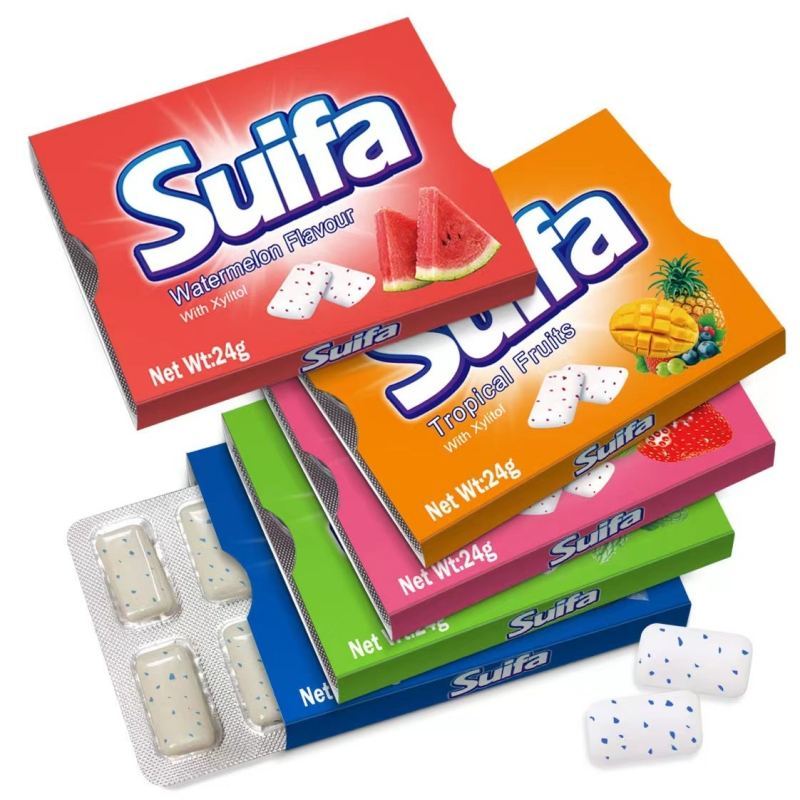
• Blister packs
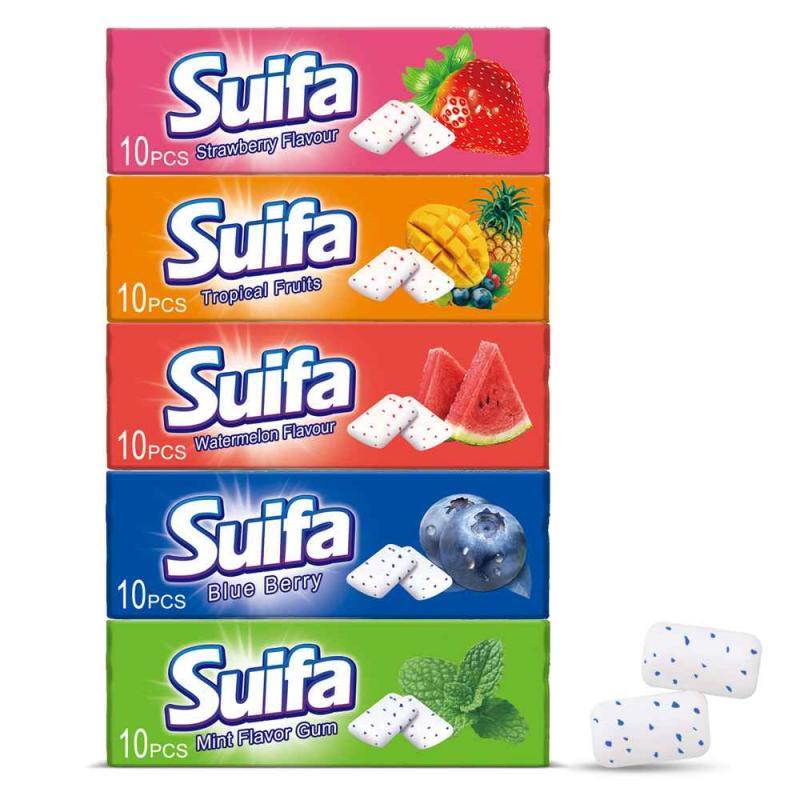
• Flip-top boxes
• Pouches
• Tins
• Stick packs
• Bottles
Each one has a different role.
Let me break them down clearly.

1. Blister Packs: Best for Piece Control and Freshness
A blister pack usually holds gum pieces in individual cavities. The consumer pushes each piece out when needed.
I like blister packs when the brand wants a clean, organized, and hygienic look.
Advantages of blister packs
• Good product protection
• Each piece stays separated
• Easy portion control
• Good for coated gum pieces
• Professional retail appearance
Blister packs can also help consumers see the quantity clearly. That supports trust.
Disadvantages of blister packs
• Less flexible for larger serving sizes
• Can feel less premium than tins
• May need extra carton packaging for better branding
• Not always ideal for e-commerce unless protected well

2. Flip-Top Boxes: Best All-Around Private Label Choice
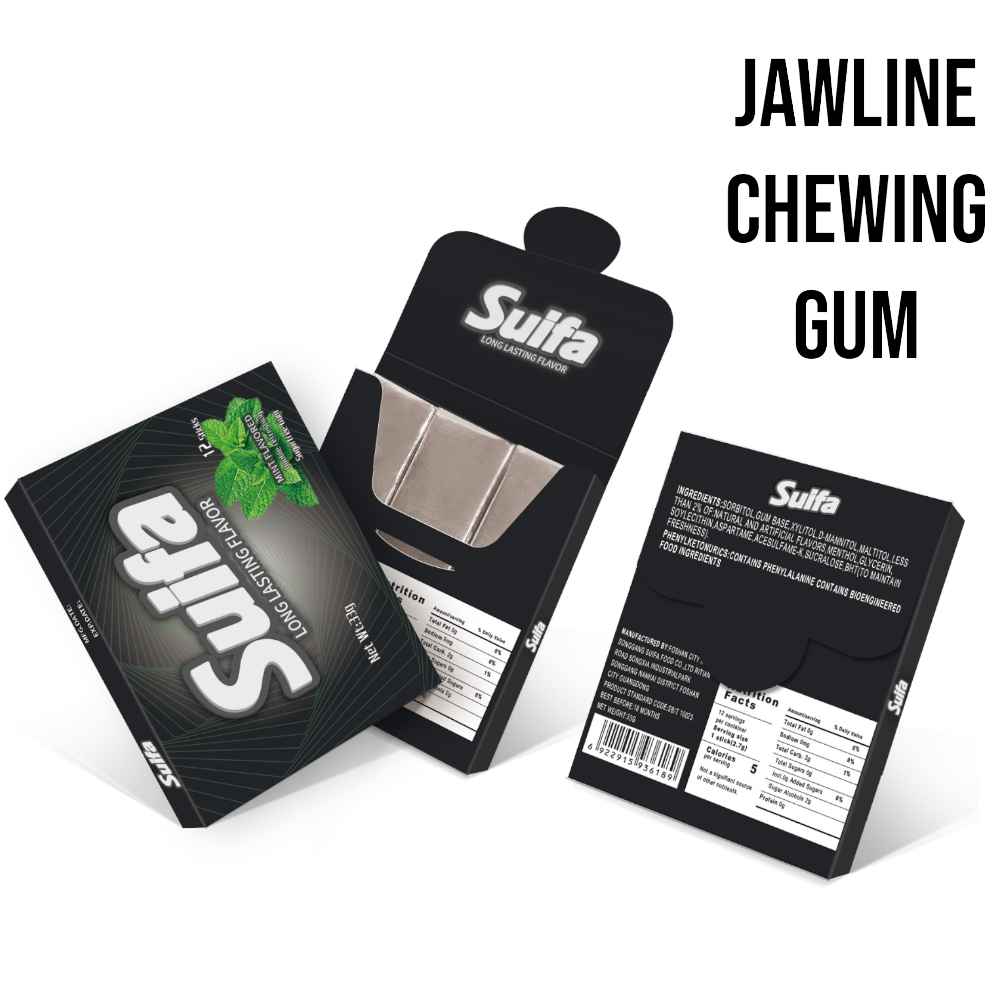
A flip-top box is one of the most common gum packaging styles. It is usually made from paperboard or plastic. The top flips open and closes easily.
This is one of my favorite options for new private label brands.
Advantages of flip-top boxes
• Strong shelf display
• Good logo area
• Portable
• Easy to open
• Familiar to gum buyers
The flat panels are very useful. We can print brand stories, flavor names, nutrition details, and QR codes.
Disadvantages of flip-top boxes
• Paperboard can crush during shipping
• Not always resealable as tightly as bottles
• Protection depends on inner wrapping and material strength
If your gum will sell in retail stores, flip-top boxes are often a safe and balanced choice.

3. Pouches: Best for Refill, Sharing, And Online Sales
A pouch is a flexible bag. It often has a zipper or resealable feature.
I recommend pouches for brands selling larger quantities, refill packs, or e-commerce gum bundles.
Advantages of pouches
• Lightweight
• Good for e-commerce
• Lower shipping weight
• Can hold more gum
• Resealable options available
Pouches can work well for sugar-free gum, functional gum, energy gum, or bulk-style private label gum.
Disadvantages of pouches
• May not stand strongly on shelf unless designed as stand-up pouches
• Can look less premium if material feels thin
• Gum pieces may rub together during transport
Do not say “eco-friendly” unless the claim is clear and supportable.

4. Tins: Best for Premium Chewing Gum
A tin gives gum a higher-end feeling. It is strong, reusable, and attractive.
I often recommend tins for premium mint gum, gift gum, lifestyle brands, and boutique private label products.
Advantages of tins
• Excellent protection
• Premium appearance
• Reusable
• Strong for e-commerce
• Great for gifting
A tin also stays around after the gum is gone. That means your logo can live longer in the consumer’s bag, car, or desk.
Disadvantages of tins
• Higher cost
• Heavier than paper or pouch packaging
• Can dent if not packed correctly
• Not always ideal for low-price gum
If your goal is a premium brand image, tin packaging is one of the strongest choices.

5. Stick Packs: Best for Sampling and Impulse Purchase
A stick pack wraps gum in slim individual paper or foil-style wrappers. This is classic gum packaging.
I like stick packs for trial sizes, promotional gum, hotel amenities, event giveaways, and low-cost retail.
Advantages of stick packs
• Very portable
• Low material use
• Good for sampling
• Easy to distribute
• Works well for impulse purchase
Stick packs are also easy to put inside a small carton or display box.
Disadvantages of stick packs
• Lower protection compared with bottles or tins
• Limited branding space per piece
• Can feel basic if design is weak
• Not ideal for loose e-commerce shipping
My advice: use stick packs when cost, sampling, and convenience matter more than premium presentation.

6. Bottles: Best for Family-Size and Strong Retail Display
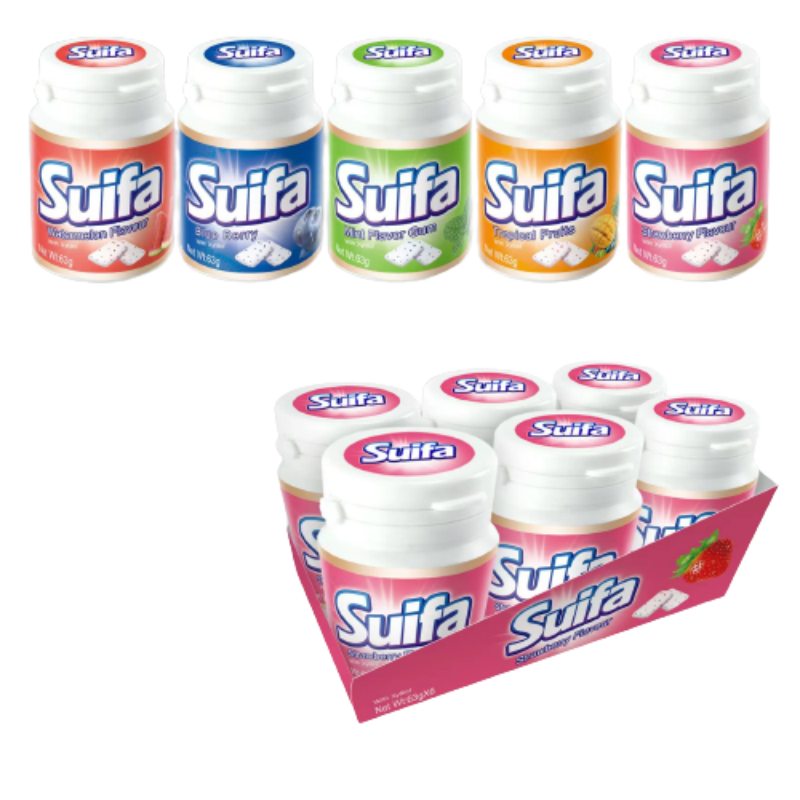
A gum bottle is usually a plastic container with a snap cap or screw cap. It is popular for larger gum counts.
This format is strong for supermarkets, convenience stores, club stores, offices, and cars.
Advantages of bottles
• Excellent portability for cars and desks
• Good product protection
• Strong shelf presence
• Easy repeat use
• Great for larger quantities
Bottles make the product feel practical. They also give brands a large label area.
Disadvantages of bottles
• Higher unit cost than stick packs
• Uses more plastic unless recyclable material is selected
• Takes more shipping space
• May not suit a minimalist brand
For recycling information, I recommend checking EPA recycling guidance:https://www.epa.gov/recycle/how-do-i-recycle-common-recyclables
If you use plastic bottles, be clear about recyclability and local recycling limits.
Packaging Comparison Across Five Key Dimensions
Below is my practical comparison table.
Scores are based on my packaging experience. 5 = strongest performance. 1 = weakest performance.
Packaging Type | Protection | Portability | Shelf Display | E-commerce Delivery | Cost Efficiency |
Blister packs | 4 | 4 | 3 | 3 | 4 |
Flip-top boxes | 3 | 5 | 5 | 3 | 4 |
Pouches | 3 | 4 | 3 | 5 | 4 |
Tins | 5 | 4 | 5 | 5 | 2 |
Stick packs | 2 | 5 | 3 | 2 | 5 |
Bottles | 5 | 4 | 5 | 4 | 3 |

What this table means
✅ For protection: choose tins or bottles. They resist pressure better than soft formats.
✅ For portability: choose stick packs, flip-top boxes, or blister packs. They fit pockets and small bags.
✅ For shelf display: choose flip-top boxes, bottles, or tins. They have strong shapes and better branding surfaces.
✅ For e-commerce delivery: choose pouches, tins, or bottles. They handle shipping stress better.
✅ For cost: choose stick packs, blister packs, or flip-top boxes. They are usually more budget-friendly.
How Should I Choose Packaging for Retail Shelves?
For retail, I focus on three things:
• Visibility
• Brand block
• Easy flavor recognition
A gum package must communicate fast. The customer should understand the flavor in one second.
That means your package should show:
• Brand name
• Flavor
• Sugar-free or functional claim
• Piece count
• Main benefit
• Clear color system
For food labeling, I suggest checking FDA food labeling resources:https://www.fda.gov/food/food-labeling-nutrition
Do not treat labeling as decoration. It is part of product compliance and consumer trust.

How Should I Choose Packaging for E-Commerce?
E-commerce packaging needs a different mindset.
In stores, the package must look attractive. Online, it must also survive delivery.
For online gum sales, I prefer:
• Pouches
• Tins
• Bottles
• Protected flip-top boxes
I am more careful with stick packs and blister packs for e-commerce. They may need outer cartons or protective mailers.
If you plan to sell through Amazon or similar channels, it helps to understand shipping and packaging expectations.
A damaged gum package creates a bad first impression, even if the gum tastes great.
Which Material Should I Use for Private Label Gum Packaging?
Material matters because gum is sensitive to moisture, heat, pressure, and aroma transfer.
Here is a simple material guide.
| Material | Common Use | Main Strength | Main Concern |
Paperboard | Flip-top boxes, cartons | Good printing and branding | Can crush or absorb moisture |
Plastic | Bottles, blister trays, pouches | Lightweight and protective | Sustainability concerns |
Metal | Tins | Premium and durable | Higher cost and weight |
Foil laminate | Stick packs, inner wraps | Good barrier protection | Recycling can be difficult |
Flexible film | Pouches | Light and e-commerce friendly | Must feel thick enough for quality |
My rule is simple: Choose the material after you define the channel.
Retail shelf? Prioritize display and print quality.
E-commerce? Prioritize protection and shipping durability.
Premium product? Prioritize hand-feel and reusability.
Budget product? Prioritize cost and production efficiency.
What Packaging Is Best for a Premium Gum Brand?
For premium gum, I recommend tins first and custom bottles second.
Premium gum needs touch appeal. The customer should feel the value before chewing.
A tin can support:
• Minimalist branding
• Embossed logo
• Metallic finish
• Reusable design
• Gift-ready positioning
A custom bottle can also work well if the shape is distinctive.
Premium packaging should never feel accidental. Every detail must look intentional.

What Packaging Is Best for a Low-Cost Private Label Gum?
For low-cost private label gum, I usually consider:
• Stick packs
• Blister packs
• Simple flip-top boxes
These formats keep the entry price controlled.
But low cost does not mean ugly. I still recommend strong flavor colors, clean typography, and clear claims.
A simple package can still look professional.
What Packaging Is Best for Sustainable Positioning?
Sustainable packaging depends on material, local recycling systems, and claim accuracy.
I usually explore:
• Paperboard flip-top boxes
• Reduced plastic bottles
• Recyclable mono-material pouches where available
• Reusable tins
• Smaller packaging footprints
But I avoid vague claims.
Instead of saying “green packaging,” say something specific like:
• Made with recyclable paperboard
• Reusable metal tin
• Designed with reduced plastic
• Please recycle where facilities exist
Sustainability must be specific, honest, and easy to understand.
My Expert Recommendation by Sales Channel
For supermarkets and convenience stores
Choose flip-top boxes, bottles, or tins.
These stand out better. They also give more room for branding.
For online stores
Choose pouches, bottles, or tins.
They are easier to protect during shipping.
For events and samples
Choose stick packs.
They are light, easy to hand out, and cost-effective.
For premium gift gum
Choose tins.
They feel special. They also encourage reuse.
For office, car, and family use
Choose bottles.
They are convenient and practical.
More Related Questions
Is Bottle Packaging Better Than Pouch Packaging for Gum?
Not always. Bottles offer stronger protection and better shelf display. Pouches are lighter and often better for e-commerce shipping efficiency.
Choose bottles for retail and family-size gum. Choose pouches for refill packs or online bundles.
Are Stick Packs Still Popular?
Yes. Stick packs remain useful for portability, sampling, and impulse buying. They are simple, familiar, and budget-friendly.
But they may not create a premium impression unless the design is excellent.
Is Tin Packaging Worth the Cost?
For premium gum, yes. Tins protect the product well and increase perceived value.
For low-price gum, tins may be too expensive.
What Is the Safest Packaging for Shipping Gum?
For e-commerce, I prefer tins, bottles, and pouches. They handle pressure better than thin boxes or loose stick packs.
What Should Be Printed on Private Label Gum Packaging?
At minimum, I plan for:
• Brand name
• Flavor
• Net weight or piece count
• Ingredients
• Nutrition facts when required
• Allergen information when needed
• Manufacturer or distributor details
• Expiration or best-before information
• Storage instructions
Always confirm local regulations before printing.
Conclusion
The best private label chewing gum packaging depends on your product goal. Choose flip-top boxes or bottles for balanced retail success. Choose pouches or tins for e-commerce. Choose stick packs for sampling. Choose tins for premium branding.
Suifa news
How is Bubble Gum Made in the Factory?
2023-05-24
How Hard Candy is Made in the Factory?
2024-02-28
Get An Instant Quotation
Recommended Products
Bulk Healthy Natural Xylitol Sugar Free Tablet Chewing Gum
Detail

Checking Order
Quality Test Before Delivery
Check Items When Packing
Packaging And Transport
Send Inquiry Now!
Choose Suifa, Boost Your Candy and Gum Project!
Discover excellent gum and candy products at our factory. We create custom solutions for our customers. Join us for exclusive insights, customized products and partnerships. Leave your contact info we'll be back in touch within 12 hours!
Choose Suifa, take your bussiness to the next level!



Contact Us
WELCOME TO SUIFAFOOD YOUR TRUSTED MANUFACTURER OF GUM AND CANDY
Address: No.8 Ritian Road Songxia lndustrial AreaSonggang Nanhai, Foshan, Guangdong, China

